Incumbency Oppression: Is Coronation Replacing Democracy Across Africa?

Africa is still holding elections. What is quietly disappearing is choice.
By Mohammed Nasir
Across the continent, ballots are cast, polling units open, results are announced—but the outcome is increasingly known in advance. Incumbency, once an advantage, has hardened into a weapon of domination, turning elections into rituals of confirmation rather than contests of ideas. What emerges is not democracy renewed, but power rehearsed and reaffirmed.
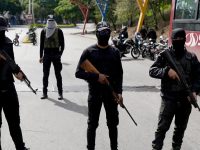
The most recent and clearest illustration of this democratic corrosion is unfolding in Uganda. President Yoweri Museveni, who seized power in 1986, is on the brink of extending his rule to nearly four decades. His previous victories—hovering between 58 and 68 per cent—were already questioned. This time, the state has gone further: internet blackouts, bans on human-rights organisations, arrests of opposition figures, restrictions on media, and the heavy militarisation of urban centres. Opposition activity has been reclassified as a security threat, while civic engagement is treated as subversion. The election exists, but its competitive spirit has been surgically removed. Iganda is not an anomaly. It is the latest chapter in a continental pattern.
In Tunisia, once celebrated as Africa’s democratic exception, President Kais Saied has demonstrated how swiftly progress can be reversed. Since dissolving parliament in 2021, his rule has been defined by arrests of political opponents, subjugation of the judiciary, and elections marked by turnout so low—barely above 10 per cent—that legitimacy itself has collapsed. Here, incumbency no longer needs overwhelming margins; citizen disengagement now performs the same function.
Further north, Egypt has perfected the arithmetic of authoritarian democracy. President Abdel Fattah el-Sisi, in power since 2014, routinely secures victories above 90 per cent, not through persuasion but elimination. Viable challengers are jailed, exiled, or disqualified, leaving voters to endorse a decision already made by the security establishment. Elections have become announcements.
In Cameroon, the logic of incumbency reaches its most extreme form. President Paul Biya, in power since 1982, has governed for over 42 years, winning elections by margins exceeding 70 per cent while opposition figures are harassed, the media constrained, and entire regions destabilised. Power here is no longer political; it is generational.
Elsewhere, the pattern repeats with local variations. Rwanda’s President Paul Kagame, in office since 2000, wins by margins approaching 99 per cent, delivering stability and growth at the cost of political plurality. Zimbabwe, despite leadership changes, remains trapped in a cycle of disputed elections, security intimidation, and judicial manipulation, with victory margins that convince institutions, not citizens. In Togo, the Gnassingbé family has turned elections into dynastic rituals, governing for over half a century through constitutional engineering and protest suppression. Algeria, after crushing mass protests, now stages tightly managed polls marked by low turnout and constrained political space.
Across these cases, the method is strikingly uniform. Security forces are deployed as political actors. Courts are converted into tools of exclusion. Media space is narrowed, civil society dismantled, digital access curtailed. Elections are not cancelled; they are controlled. The ballot survives, but uncertainty—the very essence of democracy—is extinguished.
When leaders rule for 25, 30, even 40 years, and emerge with implausible margins of 70, 90, or 99 per cent, elections cease to be mechanisms of accountability. They become ceremonies of endurance, confirming not popular will but institutional capture.
The danger extends beyond governance. When citizens realise that voting no longer alters outcomes, faith in peaceful change erodes. History shows what follows: apathy, unrest, coups, or violent resistance. Democracy does not collapse loudly—it empties quietly.
Africa’s crisis, therefore, is not the absence of elections. It is the hollowing of meaning from them.
As incumbency repression deepens and democratic rituals are preserved only in form, a troubling question confronts the continent: Are elections still instruments of choice—or merely coronations by another name?